A wet carpet feels like a minor inconvenience. Most people blot it, open a window, and hope for the best. But what is actually happening beneath those fibres tells a very different story. Water moves fast. It penetrates the padding, reaches the subfloor, and creates conditions that bacteria and mould thrive in, often before you notice anything wrong. The longer a flooded carpet stays wet, the harder and more expensive the problem becomes to fix. Here is exactly what happens, hour by hour, and why calling a professional carpet drying service early is the smartest decision you can make.
Mould can begin growing on a wet carpet within 24 to 48 hours, according to the U.S. Federal Emergency Management Agency (FEMA). Every hour you wait narrows your window to save the carpet and protect your home.
A wet carpet is not just uncomfortable. It is a ticking clock. From bacteria in the first few hours to mould and structural damage beyond 48 hours, here is exactly what is happening beneath your feet and why acting fast makes all the difference.
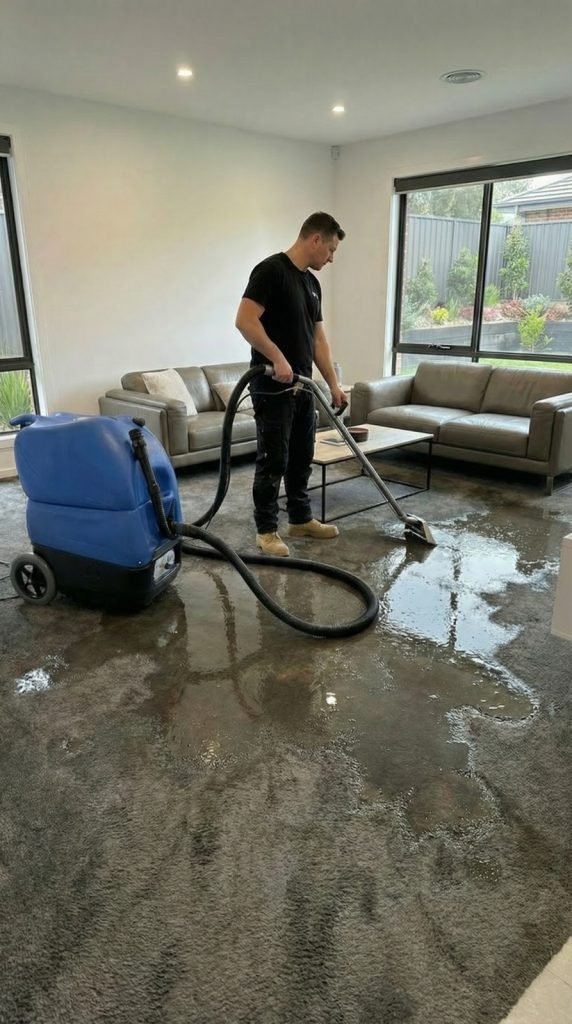
What Happens in the First Few Hours
The damage from a wet carpet starts immediately, even when nothing looks obviously wrong. In the first few hours, water works its way through every layer beneath your feet. This is the window where quick action matters most, and where professional carpet water extraction can make the biggest difference to the final outcome.
Water Spreads Through Carpet Fibres
The moment water contacts your carpet, it begins spreading laterally through the fibres, often well beyond the visible wet area. Carpet wicks moisture outward quickly. A small wet patch on the surface may already cover a much larger area underneath. Professional flooded carpet drying in Perth uses moisture meters rather than visual inspection to map the true extent.
Padding Begins to Absorb Moisture
Beneath the carpet sits the underlay, typically foam or rubber-based padding. It is highly absorbent and slow to release moisture. Once water reaches the padding, it holds it long after the carpet surface appears dry. Drying wet carpet effectively requires addressing this layer directly. Household fans cannot reach it.
Moisture Reaches the Subfloor
Water begins seeping into the subfloor. Timber swells, softens, and can buckle. Concrete holds moisture in its pores and prolongs damp conditions. In many Perth homes with yellow tongue particleboard subfloors, even a few hours of saturation can begin a process leading to costly structural repairs if not addressed quickly.
Odours and Dye Transfer Begin
Bacterial activity in the warm, wet environment produces odours within hours. A musty or sour smell is an early sign that professional wet carpet drying is needed. Wet carpet fibres are also vulnerable to dye transfer from furniture legs, causing stains that become harder to remove the longer the carpet stays wet.
What Happens After 24 Hours
If wet carpet drying has not started within the first 24 hours, the situation shifts from urgent to serious. The risks are no longer limited to the carpet itself. Bacteria, structural materials, and indoor air quality all begin to deteriorate in ways that are harder and more expensive to reverse the longer they are left.
Bacteria and Microbes Begin Multiplying
Bacteria multiply rapidly in the 20 to 40 degree Celsius range typical of Australian homes. Within 24 hours, microbial counts in a flooded carpet can reach levels that pose real health risks. Professional carpet water extraction removes the moisture bacteria depend on before this stage takes hold.
Musty Smells Become More Noticeable
What started as a faint odour in the first few hours becomes noticeably stronger after 24 hours. The smell comes from bacterial activity and early mould growth in the padding and subfloor. Proper water extraction from carpet layers and antimicrobial treatment after drying carpets are needed to neutralise it at the source.
Carpet Adhesives May Start Weakening
Many carpets are held in place with adhesive, and prolonged moisture exposure causes that adhesive to break down. After 24 hours, you may notice the carpet beginning to lift, bubble, or shift at the edges. Once the adhesive bond deteriorates, re-laying the carpet adds to the overall restoration cost. Prompt flood-damaged carpet drying helps preserve the adhesive before this stage is reached.
Damp Padding Becomes Harder to Save
Carpet padding that has been wet for more than 24 hours is often beyond saving and needs to be replaced. The longer foam or rubber underlay holds moisture, the more it compresses, deforms, and becomes a reservoir for bacteria and early mould growth. In many water damage restoration services, the underlay is removed and replaced even when the carpet above it can be salvaged, making early action the key to keeping costs down.
Indoor Air Quality Can Start Declining
As bacteria and early-stage mould release spores into the air, indoor air quality drops. People in the space may notice respiratory irritation, allergy symptoms, and general stuffiness. According to Victoria’s Better Health Channel, mould in damp buildings can trigger nasal congestion, sneezing, coughing, wheezing, and worsened asthma. These effects begin within 24 to 48 hours if wet carpet drying is delayed.
What Happens After 48 Hours
Beyond 48 hours, a wet carpet moves from a restoration problem to a potential health and structural emergency. The window for saving the carpet and avoiding serious property damage narrows sharply. Professional intervention is no longer optional. Here is what happens:
Mould Growth Becomes a Major Concern
Mould can begin growing on a wet carpet within 24 to 48 hours. After 48 hours, mould colonies are likely establishing in the padding and subfloor. Common species include Aspergillus, Penicillium, and Cladosporium. Stachybotrys chartarum can take hold in severe cases, releasing mycotoxins linked to serious illness.
Carpet Backing May Separate or Break Down
The backing layer bonded to the underside of your carpet gives it structural integrity. After extended moisture exposure, this backing can delaminate and separate from the fibres above. Once delamination occurs, the carpet cannot be re-laid and must be replaced.
Stains Can Become Permanent
Dye transfer, rust marks, and discolouration that began in the first few hours becomes increasingly difficult to remove after 48 hours. Wet fibres that have had prolonged contact with furniture bases or floodwater chemicals hold those stains as the fibres set.
Subfloor Damage May Begin
Timber subfloors absorb moisture, swell, and begin to warp. Yellow tongue particleboard, common in Perth homes, can soften and lose structural integrity. Concrete subfloors retain moisture deep in their pores, continuing to feed mould growth long after the surface appears dry.
Act Fast, or Pay the Price Later!
The pattern is clear. A wet carpet is not a problem that improves on its own. Every hour without proper wet carpet drying increases the risk of mould, structural damage, permanent staining, and serious health consequences. The first 24 hours are critical. The 48-hour mark is where manageable problems become major ones. And beyond that point, water-damaged carpet drying costs rise sharply while the chances of saving the carpet and subfloor fall just as fast.
When it comes to professional carpet drying in Perth, Flood Services Perth is the locals rely on. Available 24 hours a day, 7 days a week, with onsite arrival within the hour, we handle everything from water extraction to wet carpet drying across all of Perth. Call us on 08 9468 8413 or book us online and get the problem resolved before it becomes a much bigger one!