Carpet drying in Perth is not something most homeowners think about until water is already spreading across the floor. A flooded carpet can happen fast, and how quickly you respond makes the difference between a recoverable situation and a costly replacement. Whether it is from a burst pipe, heavy storms, or an appliance leak, proper wet carpet drying protects your home, your health, and your budget.
The risks hidden inside a soaked carpet go well beyond the surface. Within 24 to 48 hours of water exposure, mould spores can begin colonising deep within carpet fibres and the underlay underneath. Once mould takes hold, it is not just your carpet at risk. Indoor air quality drops, respiratory problems can develop, and structural damage to the subfloor becomes a real possibility. In Perth’s climate, where high humidity in coastal suburbs and warm temperatures create ideal conditions for mould, the urgency is even greater. Acting within the first few hours is not an overreaction. It is the smart move.
Tools and Supplies You Need to Dry Carpet Properly
Having the right equipment before you start makes every step faster and more effective. If you do not have access to some of these tools, it is a strong indicator that a professional water damage restoration or carpet drying service will achieve far better results than a DIY approach.
1. Wet/Dry Vacuum
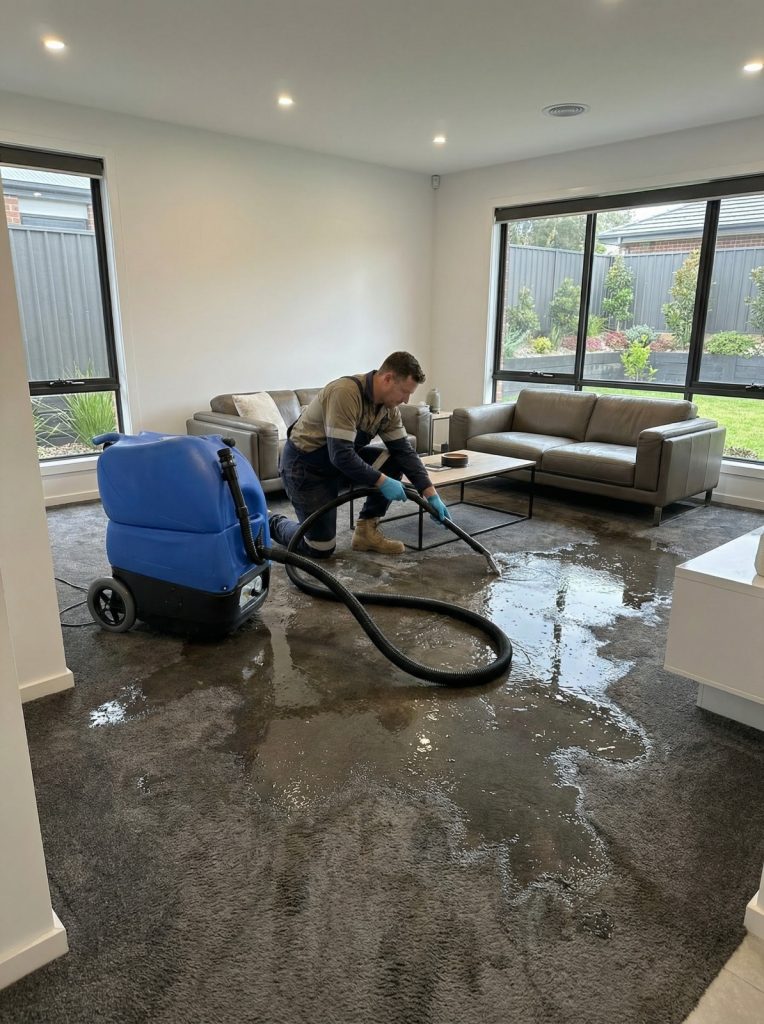
A wet/dry vacuum (shop vacuum) is the most important tool for water extraction from carpet. It pulls liquid directly from carpet fibres far more effectively than any towel or mop.
2. Towels and Absorbent Cloths
Thick bath towels or microfibre cloths are essential for blotting residual surface moisture after the bulk of the water has been removed. Have plenty on hand.
3. Fans and Air Movers
Box fans or pedestal fans increase airflow over wet surfaces. Industrial air movers, if available, dramatically speed up drying wet carpet by pushing a much greater volume of air across the floor.
4. Dehumidifier
A dehumidifier pulls moisture out of the air and helps bring overall room humidity down. Without one, moisture simply evaporates from the carpet and stays trapped in the room, slowing the drying process.
5. Carpet Cleaner or Disinfectant
Any water event brings bacteria. A carpet-safe disinfectant or antimicrobial spray should be applied after drying to eliminate contaminants and prevent mould growth in the fibres.
6. Baking Soda or Odour Absorbers
Baking soda is a safe and effective odour absorber for carpet. Once the carpet is nearly dry, it draws out residual moisture and neutralises musty smells from the damp fibres.
Step 1: Stop the Water Source Immediately
Before you touch the carpet, the water has to stop. Drying carpet while water continues to flow in is a waste of effort. Identify the source, stop it, then begin the restoration process.
Shut Off Leaking Pipes or Appliances
If the source is a burst pipe, turn off the water at the mains immediately. For a leaking appliance such as a washing machine, dishwasher, or hot water unit, switch the appliance off at the wall and isolate the water supply valve behind or underneath it. Do not restart the appliance until it has been inspected and repaired by a licensed tradesperson.
Block Outdoor Water Entry
In a storm or flooding event, stop additional water from entering the affected area. Use towels, sandbags, or door draft stoppers to block water at entry points such as doorways, vents, or gaps in walls. Close any windows or doors that are allowing rain to enter the space.
Step 2: Remove Standing Water
Speed matters here. The faster you remove standing water, the less chance moisture has to penetrate through to the underlay and the subfloor below. This is where carpet water extraction makes the biggest impact.
Use a Wet/Dry Vacuum Correctly
Attach the wide floor nozzle to your wet/dry vacuum and work in slow, overlapping rows across the carpet. Do not rush. The vacuum needs time on each pass to draw liquid up from the fibres. Empty the collection tank regularly to maintain suction power throughout the process.
If you have a large area of flooded carpet, work from the outer edges toward the centre. This prevents spreading water into areas that are still dry.
Avoid Using a Regular Household Vacuum
A standard dry-only household vacuum is not designed for liquid. Using one on wet carpet risks serious electrical damage to the motor and creates an electrocution hazard. Only use a vacuum that is explicitly rated for wet use. If you do not have one, this is the point at which calling a carpet drying service is the safest and most practical choice.
Work Slowly to Extract as Much Water as Possible
Thorough extraction now reduces drying time significantly. Make multiple passes over the same area. Drying wet carpet from a saturated state is a multi-hour process even under ideal conditions, so the more water you remove mechanically, the less work the fans and dehumidifier need to do afterwards.
Step 3: Blot and Absorb Surface Moisture
Once you have removed as much standing water as possible, the next stage is addressing the surface moisture that remains in the top layer of carpet fibres. Towels do the heavy lifting here.
Use Towels to Press, Not Rub
Place thick towels flat over the wet area and press down firmly with your hands or feet. The goal is to draw moisture up into the towel through compression, not to scrub the fibres. Rubbing a wet carpet can break down the pile, distort the weave, and cause permanent fibre damage that no amount of drying will fix.
Replace Towels as They Become Saturated
A saturated towel cannot absorb any more moisture. Swap it out for a dry one and continue working across the wet area. Wring out saturated towels and reuse them once they have released their water, or have a second set ready if the affected area is large.
Apply Weight for Better Absorption
To maximise absorption, place a stack of towels over the wet area and set heavy objects on top, such as books or buckets. Leave them in place for 10 to 15 minutes. The added weight forces more moisture into the towels than hand pressure alone can achieve.
Step 4: Lift the Carpet if Necessary
If the water event was significant, or if the carpet has been wet for more than a few hours, you will need to lift it from the floor to dry both the underlay and the subfloor underneath. This is one of the most important steps in flood-damaged carpet drying, and it is often skipped by homeowners who underestimate how much moisture gets trapped beneath the surface.
To lift the carpet safely:
- Start at a corner of the room and use a flat pry bar or pliers to pull the carpet away from the tack strips along the skirting boards.
- Fold the carpet back to expose the underlay and subfloor. Check both for moisture and visible mould.
- If the underlay is saturated, in most cases it will need to be removed and replaced. Underlay does not dry effectively while it is sandwiched between the carpet and the floor, and wet underlay is a primary source of persistent musty odour.
- Allow the subfloor to dry fully before relaying the carpet. Concrete subfloors retain moisture longer than timber, so use a moisture meter to confirm it is dry before proceeding.
Step 5: Increase Air Circulation
Moving air is one of the most effective forces in drying carpet quickly. Once you have removed the bulk of the water, maximising airflow across the affected area will pull moisture out of the fibres and carry it away from the room.
Position Fans Across the Wet Carpet
Set up multiple fans around the perimeter of the wet area, angled low toward the carpet surface. The goal is to create cross-ventilation that sweeps moist air away from the surface and replaces it with drier air from other parts of the room. A single fan pointed at the centre is far less effective than several fans creating directional airflow across the whole space.
Open Windows When Outdoor Air is Dry
If the humidity outside is lower than it is inside (common on dry sunny days in Perth), opening windows will help carry moist air out of the room. Check the weather before you open windows. On humid days, or during a storm event, outdoor air may actually introduce more moisture than it removes, making the drying process slower.
Step 6: Clean and Sanitise the Carpet
Once the carpet is dry to the touch, it still needs to be cleaned and sanitised. Apply a carpet-safe antimicrobial disinfectant to the entire affected area following the product instructions carefully. Allow it to dwell for the recommended time before blotting away any excess with a clean cloth.
Key sanitisation steps to follow:
- Apply a carpet-safe antimicrobial spray to all affected areas.
- Work the product into the fibres using a soft brush if required by the product label.
- Allow the dwell time specified on the product label before removing excess.
- Follow up with a hot water extraction clean for deep decontamination where possible.
- Inspect the underlay if it was retained. If it has any visible mould or persistent odour, replace it rather than attempting to sanitise it in place.
Step 7: Remove Odours
A musty smell after drying wet carpet is one of the most common complaints homeowners have, and it is often a sign that moisture was not fully eliminated or that mould is already developing beneath the surface. Addressing odours promptly is the final step in a thorough carpet drying process.
Use Baking Soda After the Carpet is Nearly Dry
Once the carpet is almost fully dry but still slightly cool to the touch, sprinkle a generous, even layer of baking soda across the entire affected area. Baking soda draws out residual moisture from the fibres and absorbs the organic compounds responsible for musty smells. Leave it on the carpet for a minimum of 30 minutes. For stronger odours, leave it overnight.
Vacuum Odour Absorbers Thoroughly
Once the baking soda has had time to work, vacuum it up thoroughly using a dry vacuum with a clean filter. A clogged filter will reduce suction and leave baking soda residue in the fibres, which can attract dirt over time. Go over the area two or three times to ensure complete removal.
Do the Job Properly the First Time: Key Takeaways
Drying carpet after a water event is a multi-step process, not a single action. Every step matters. Stop the source, extract the water, blot the surface moisture, lift the carpet if needed, maximise airflow, control humidity, sanitise, and address odours. Skipping any of these steps leaves moisture somewhere in the system, and moisture always finds its way back as mould, odour, or structural damage.
- Act within the first 24 hours. Mould can begin forming in as little as 24 to 48 hours in a warm, moist environment.
- Water extraction from carpet is the single most important first step after stopping the source.
- Underlay holds more water than the carpet itself. Check and dry it separately, or replace it if it is saturated.
- Fans and dehumidifiers must run continuously, not just during the day.
- Sanitise every affected area, not just the visible surface of the carpet.
- A musty smell after drying is a warning sign, not just a nuisance. Address it immediately.
- When the damage is significant, recent, or involves contaminated water, professional carpet drying delivers faster, safer, and more thorough results than any DIY approach.
Flood Services Perth specialises in professional carpet drying across the entire Perth metropolitan area, covering residential and commercial properties. We offer 24/7 emergency callouts for water damage restoration or drying equipment hire and are typically on-site within one hour of your call.
From water extraction and flooded carpet drying service through to final inspection, we handle the full restoration process from start to finish. Call (08) 9468 8413 or fill our online booking form today!