Storm season is no gentle affair. Between May and August, the city receives close to 70% of its annual rainfall, with the Bureau of Meteorology recording a long-term average of around 727 mm per year across the metro area. When those cold fronts push in from the Southern Ocean and the rain buckles down, properties across the city face a serious and often underestimated threat: water damage.
Most people picture flooding as something dramatic, rivers bursting their banks, cars submerged in streets. But the reality is quieter and far more common. A single heavy rainstorm is enough to send water through roof tiles, overwhelm gutters, seep through walls, and saturate flooring. By the time the rain stops, the damage is already done. And for many home and business owners, the worst of it stays hidden for days.
The Difference Between Minor Moisture and Serious Water Intrusion
Not all water entry is immediately obvious. A small amount of moisture from a roof leak might go unnoticed for weeks, slowly saturating insulation and ceiling cavities before it ever appears as a stain. This distinction matters enormously. Minor moisture can be managed with relatively low-cost intervention. Serious water intrusion, where water has penetrated structural elements, soaked into subfloors, or contaminated contents, requires professional flood damage restoration to resolve safely.
The 24 to 48-hour window after water enters a property is critical. Mould begins to develop within that timeframe. Once it takes hold, the flood remediation scope and cost increase significantly. Speed is not just convenient in these situations; it is the difference between a manageable repair and a major structural problem.
Understanding Rainstorm Water Damage
Storm-related water damage covers any water intrusion into a property that results directly from a weather event. This includes rain penetrating through damaged or overwhelmed roof systems, stormwater entering through windows, doors, or foundation cracks, surface water pooling around or beneath a structure, and drainage or sewer systems backing up under pressure from heavy rainfall. It is worth noting that storm damage is generally distinct from gradual deterioration or plumbing faults, though the two can intersect when a storm event overloads an already compromised system.
Clean Water, Grey Water, and Contaminated Stormwater
Not all floodwater carries the same risk. Professionals in flood damage restoration classify water intrusion into categories based on contamination levels.
Category 1 is clean water from a rain source with no direct contact with sewage or other contaminants. While less immediately hazardous, it still requires prompt extraction and drying to prevent secondary damage.
Category 2 is grey water, which may contain chemical or biological matter at levels that can cause discomfort or illness. This can occur when stormwater mixes with minor sewage overflow or household waste.
Category 3 is the most serious classification and covers heavily contaminated water, including sewage backup and stormwater that has been in contact with soil, waste, or other hazardous material. This is common in significant storm events where drainage infrastructure is overwhelmed. Category 3 requires specialist flood cleaning services and strict safety protocols to handle safely.
Why Timing Matters After Heavy Rain
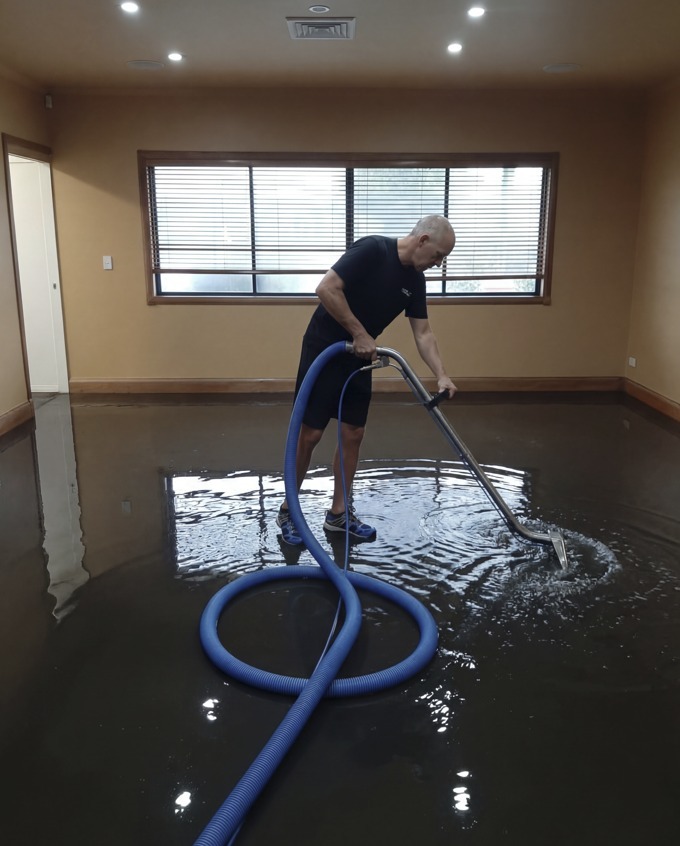
Every hour that passes after a rainstorm event extends the window for secondary damage. Water migrates. It moves laterally through wall cavities, tracks along structural beams, wicks up through carpet underlay, and seeps into subfloor systems. What begins as a contained intrusion point can spread to affect a much larger area within hours.
This is why emergency flood response is not simply about mopping up visible water. It requires moisture mapping, structural assessment, and targeted drying to address water in every location it has reached, not just the surface areas.
The Main Ways Rainstorms Damage Properties
Rainstorms do not damage a property through one single mechanism. Water finds its way in through multiple pathways simultaneously, and each entry point creates its own chain of consequences. Understanding these pathways helps property owners recognise the warning signs early and act before minor intrusion becomes major flood damage.
Roof Vulnerabilities During Rainstorms
The roof is a property’s first line of defence, and during a Perth winter storm it takes the full force of sustained rain, wind uplift, and debris impact. Cracked tiles, deteriorated flashing around chimneys and skylights, and compromised ridge capping all create entry points. What makes roof intrusion especially damaging is that water travels silently through ceiling insulation and cavity spaces before it ever appears as a visible stain inside. By that point, significant material is already saturated.
Gutter Overflow and Poor Drainage
Gutters exist to channel water away from the structure. When they are blocked with debris or undersized for the rainfall volume, they overflow down exterior walls, pool at the base of the building, and force water into any available gap. Perth’s sustained winter downpours can overwhelm even well-maintained systems. When the water has nowhere to go, it becomes a direct source of flood damage to walls, foundations, and interior flooring.
Foundation and Basement Water Intrusion
When stormwater saturates the soil around a building’s perimeter, hydrostatic pressure builds against the foundation. This pressure forces water through cracks and joints in concrete slabs and footings. Subfloor spaces in Perth homes are particularly susceptible during prolonged rain events. Left unaddressed, this persistent moisture accelerates timber decay and creates conditions for serious structural deterioration.
Window and Door Intrusion
Windows and external doors are common entry points, particularly in older properties where seals and weatherstripping have deteriorated. When heavy rain is accompanied by wind, water is driven horizontally against frames rather than falling vertically, pushing past seals that would hold under normal conditions. Sliding doors and aluminium-framed windows are especially prone. Water entering here typically affects sills, adjacent walls, and flooring directly beneath.
Plumbing and Sewer Problems Triggered by Rainstorms
Heavy rainfall overloads drainage infrastructure, and when systems reach capacity, sewage can back up through floor drains, toilets, and laundry outlets. This is a Category 3 contamination event and a genuine health risk. In commercial properties, basement and ground-floor drains are particularly vulnerable. Contaminated backflow can enter premises within minutes of a peak rainfall event, making rapid emergency flood response and water damage restoration critical before re-entry.
Interior Damage Caused by Rainwater
Once water breaches the building envelope, interior damage moves fast. Carpet and underlay retain moisture long after surface water is gone. Hardwood flooring swells and warps. Plasterboard loses structural integrity. Insulation becomes saturated and ineffective. For a flooded house, the cost is disruptive. For a business, it can mean destroyed stock, damaged equipment, and extended closure during flood damage cleanup and restoration.
Electrical and Fire Hazards After Water Intrusion
Water reaching electrical systems can cause short circuits, damage wiring insulation, and in serious cases, create conditions for an electrical fire. Subfloor wiring, floor-level power points, and ceiling fixtures above water-soaked insulation are all at risk. If stormwater has reached your switchboard or electrical cabling, vacate the property immediately and do not operate any electrical systems. A licensed electrician must clear the installation as safe before any flood damage specialist begins flood recovery work.
When the Storm Passes, Act Fast: What Perth Property Owners Need to Know
Rainstorms in Perth are a seasonal reality, and the flood damage they leave behind is rarely as simple as it appears on the surface. Water travels, hides, and compounds. A roof leak becomes a mould problem. A saturated subfloor becomes a structural issue. An overwhelmed drain becomes a contamination event. The pattern is consistent: the longer the response is delayed, the greater the damage and the higher the cost.
Flood Services Perth is a 24/7 flood and water damage restoration team serving residential and commercial properties across Perth. With a typical on-site response time of one hour, we provide immediate water extraction, carpet drying, and full flood restoration Perth-wide.
Whether you are dealing with a flooded house after a storm or managing flood damage to a commercial premises, we are ready to respond. Call us at 08 9468 8413 any time, day or night, or book a service online!
Do not wait for the damage to worsen! The sooner flood emergency services are on site, the better the outcome for your property!