Flood restoration in Perth typically takes anywhere from 24 hours for a minor, single-room incident to several weeks for severe structural flooding involving contaminated water or mould. Most residential jobs involving moderate water damage to carpets, flooring, and walls are resolved within three to seven days, provided a professional team responds quickly. For significant structural flooding across multiple rooms, a realistic timeline is ten to fourteen days. The key is that the clock starts the moment water enters your property, not when you call for help.
No two flood events are the same, which is why restoration timelines vary so widely. The type of water involved, how deeply it has penetrated your building materials, whether mould has already started to grow, and how quickly professional flood emergency services Perth were engaged all play a critical role. A job that receives expert attention within the first hour looks completely different from one where water has been sitting undiscovered for 24 hours or more. Understanding these variables helps you set realistic expectations and, more importantly, make faster decisions that protect your property.
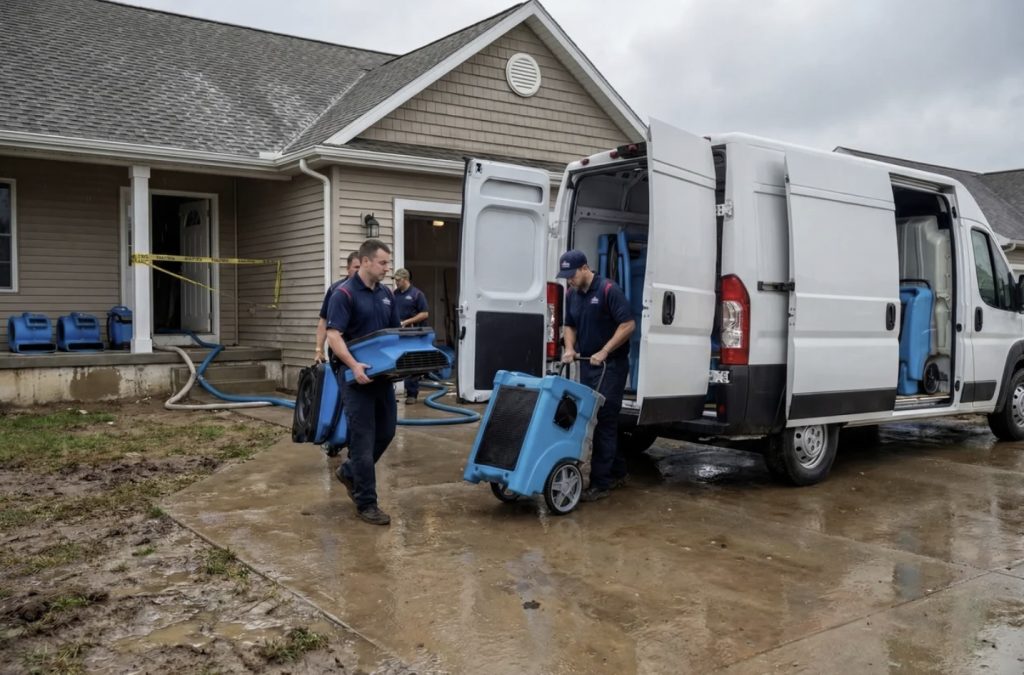
Key Factors That Influence Restoration Duration
Size and scope of the affected area. A single wet carpet in one room is a very different job from water that has spread across multiple rooms, penetrated under flooring, or soaked into wall cavities and insulation. Larger areas require more equipment, more time, and more thorough moisture monitoring to achieve a verified dry outcome.
The category of water. Professionals classify floodwater into three categories. Category 1 is clean water from a burst pipe or rainwater, which is the safest and quickest to resolve. Category 2 is grey water from appliance overflow or sink backup, which requires sanitisation before drying can begin. Category 3 is black water from sewage or external storm flooding, which demands full decontamination and often the removal of affected building materials. Category 3 events extend the timeline considerably.
How long the water was present before treatment. Water moves fast. It wicks into carpet underlay within minutes, penetrates timber floors within hours, saturates wall insulation, and hides in subfloor cavities. A room with standing water for eight hours compared to one hour can add days to the overall restoration process. This is exactly why our emergency flood response Perth team prioritises on-site arrival within the hour, every time.
Whether mould has already developed. Mould can begin growing within 24 to 48 hours of water exposure in warm, humid conditions. Once mould takes hold, remediation becomes a separate process running alongside standard water damage restoration, adding time, cost, and health risk to the job. Calling a flood damage specialist early is the single most effective way to prevent this.
The materials affected. Porous materials such as carpet, timber, plasterboard, insulation, and concrete take longer to dry than hard, non-porous surfaces. Structural materials that are deeply saturated require industrial drying equipment and daily monitoring to ensure moisture is fully eliminated, not just reduced to surface level.
The Stage-by-Stage Process
Flood restoration is not a single action. It is a structured, multi-stage process where each step depends on the one before it. Skipping or rushing any stage leads to incomplete drying, hidden moisture, and long-term damage. Here is what a professional flood damage restoration job looks like from start to finish.
Stage 1: Emergency Response and Assessment
Duration: Day 1, typically within 60 minutes of your call.
When you contact our flood emergency services Perth team, certified specialists arrive on-site within the hour. The first task is a thorough site assessment using thermal imaging cameras, calibrated moisture meters, and structural monitoring equipment to map exactly where water has travelled, including areas that are not visibly wet. Thermal imaging is critical here because water frequently moves into wall cavities, subfloor voids, and ceiling spaces that look completely dry to the naked eye. This assessment determines the scope of the job, the equipment required, and the realistic timeline for your specific situation.
Stage 2: Water Extraction
Duration: Day 1 to Day 2, depending on volume and material type.
Rapid water extraction is the most critical early step in flood damage cleanup. Using commercial-grade truck-mounted and portable extraction units, our team removes standing water from all affected areas, including water trapped in carpet backing, underlay, and subfloor cavities that a consumer pump cannot reach. Thorough extraction at this stage directly reduces how long the drying phase takes. Every litre of water removed by extraction is water that does not need to be evaporated by drying equipment, which translates to less time, less energy, and better outcomes for your property.
Stage 3: Structural Drying
Duration: Day 2 to Day 7 as a minimum, often longer for severe events.
Structural drying is typically the longest phase of flood restoration. Industrial air movers and dehumidifiers are deployed throughout the affected areas and run continuously, drawing moisture out of walls, floors, subfloor spaces, and structural cavities. Our specialists take daily moisture readings using calibrated meters and adjust equipment placement as drying progresses. Per the IICRC S500 Standard for Professional Water Damage Restoration, which governs best-practice flood restoration in Australia, structural drying requires a minimum of three to five days for standard residential materials and cannot be safely accelerated. Pulling equipment early because the space looks or feels dry is one of the most common causes of mould growth behind walls and under flooring weeks after the initial event. We monitor to documented target moisture levels, not to appearances.
Stage 4: Mould Prevention and Sanitisation
Duration: Completed during and immediately after the drying phase.
Once water extraction is complete and structural drying is underway, our flood cleaning services include the application of professional-grade antimicrobial treatments to all affected surfaces. These treatments eliminate existing bacteria, neutralise pathogens introduced by floodwater, and inhibit mould spore germination in materials that remain at elevated moisture levels during the drying period. For Category 2 or Category 3 water events, this step also involves the safe removal and disposal of materials that cannot be adequately decontaminated, such as saturated insulation or compromised plasterboard. Air purification using HEPA-grade filtration units runs concurrently to remove airborne mould spores and contaminants from the indoor environment.
Stage 5: Final Inspection and Clearance Report
Duration: Day 3 to Day 14, depending on when target moisture levels are reached.
A property is only declared dry and safe for reoccupation when moisture readings across all affected structural materials return to target levels defined by the IICRC S500 standard, not simply when it looks, feels, or smells dry. Our specialists conduct a final inspection with the same calibrated moisture meters used at assessment, documenting readings across every monitored point. We issue a written clearance report confirming that drying is complete, all areas have been treated, and the property meets industry standards for reoccupation. This report also serves as critical documentation for insurance claims, strata managers, landlords, and future property transactions.
Act Fast, Recover Faster: Your Next Steps After a Flood
The timeline for flood restoration is largely in your hands. The sooner a professional team is on-site, the shorter and less costly the recovery. For every hour water sits untreated in your home or business, it penetrates deeper, spreads further, and raises the risk of mould. Calling for flood emergency services Perth within the first hour of a flood event can reduce the overall restoration timeline by days and significantly reduce structural damage.
Flood Services Perth operates 24 hours a day, 7 days a week, with certified specialists available across the entire Perth metropolitan area. Whether you are in the CBD, northern or southern suburbs, or surrounding regions, our team can be on-site within the hour. We provide complete flood damage restoration from initial emergency response through to your final clearance report, including water extraction, structural drying, mould remediation, sewage cleanup, wet carpet restoration, odour control, and full insurance documentation support. Residential or commercial, minor or major, no job is beyond our capability.
If you are dealing with a flood emergency right now, call us immediately on 1800 908 908 or book us online and let our team get your property back to pre-flood condition, fast!