Whether home insurance will cover water damage in WA comes down to a single question: where did the water come from. Most policies pay for a burst pipe, a failed hot water system or a storm driving rain through a broken roof tile. Flood sits in its own category, and it often produces a different answer. Australian home policies are built on a legal floor called standard cover, and each insurer adds its own exclusions on top, so your policy schedule matters more than the brochure.
If you’re standing in a wet hallway right now, act before you argue. Turn the water off, kill the power to affected circuits and call a water damage specialist for a water damage restoration in Perth. Stopping the water and starting the dry-out protects your floors and your claim at the same time. Perth homeowners lose more to the first 24 hours than to any policy exclusion.
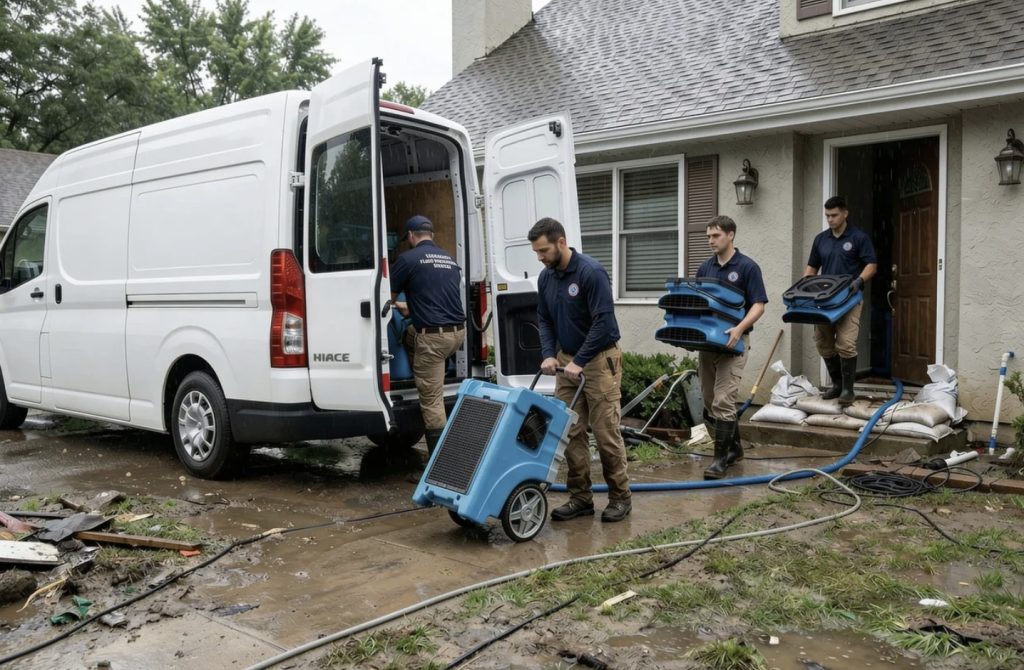
What Home Insurance Usually Covers in WA
Australian home policies sit on a legal floor called standard cover, set out in the Insurance Contracts Regulations 2017. That floor includes sudden escape of liquid from fixed pipes, fixed tanks and fixed apparatus. An insurer can offer you a home insurance for water damage less than that floor, but only if it clearly tells you in writing before you buy.
Water Damage Insurers Usually Cover
Water damage is a broad category, so insurers split it by cause. These are the events most WA policies pay for:
- A pipe that splits inside a wall, under a slab or in the ceiling
- A hot water system or a flexible hose that lets go
- Sudden escape from a washing machine, dishwasher or fridge water line
- Storm damage, including rain forced in through a damaged roof, broken window or failed flashing
- Overflow from a bath, basin or sink, though some policies cap this
- The resulting damage: swollen cabinetry, sagging plasterboard, lifted floating floors and ruined carpets
One catch most people miss. The policy usually covers the mess, not the part that failed. If a hose bursts, you get the ceiling. You often don’t get the hose.
Water Damage Insurers Usually Exclude
The exclusions matter more than the inclusions, because they’re what decline a claim. Watch for these:
- Flood, where cover was excluded or never added
- Actions of the sea, including storm surge and tsunami
- Gradual leaks and damage that builds over weeks or months
- Wear and tear, corrosion, faulty workmanship and poor maintenance
- Movement of earth, such as subsidence, landslide or erosion
- Water coming through an opening you knew about and didn’t fix
Read the exclusions page of your PDS once, before you need it. It takes five minutes and it changes how you react at 2am.
Does Home Insurance Cover Water Damage From…?
This is where most disputes start. Your insurer’s first question is never how much water. It’s where the water came from and when it started. Same hallway, three different answers.
Burst Pipes and Plumbing Failures
A burst pipe is usually covered, and the key word is sudden. A pipe that gives way on a Tuesday morning is a claim. A joint that has been weeping into a wall cavity for eight months is maintenance, and insurers have seen enough of them to know the difference.
Storm and Rain Coming in Through the Roof
Storm damage is usually covered, provided the rain got in through a sudden event. DFES reports the south west of WA gets four to six cold fronts a month between April and October, one or two of them severe, plus about five tornado reports a year including two that typically hit the Perth metro area. That’s a lot of chances for a tile to lift.
If your ceiling has been stained and sagging for two winters, expect the insurer to call it maintenance rather than storm.
Washing Machine, Dishwasher and Hot Water System Leaks
Sudden appliance leaks are generally covered. Hoses and flexi lines cause most of them and cost very little to replace, which is exactly why insurers look hard at maintenance. Keep the failed hose. The assessor may want to inspect it.
Mould That Shows Up After Water Damage
Mould is the most argued-about line on any water claim. Most policies cover mould that results from an insured event and exclude mould from long-term damp. WorkSafe WA advises that porous materials like carpet and ceiling tiles can be dried if the water has been present for less than 48 hours. Those 48 hours decide whether you have a drying job or a remediation job.
Water That Came in From Outside: Flood and Storm Surge
Flood has a legal definition and it’s the same in every Australian home policy since 2012. It means the covering of normally dry land by water that has escaped or been released from the normal confines of a lake, river, creek or other natural watercourse, a reservoir, a canal or a dam.
A river breaking its bank is flood. Water pooling in your yard because the stormwater drain couldn’t keep up is usually stormwater runoff, which most policies treat as storm. That distinction settles claims across the Swan and Canning floodplains every winter. Storm surge sits outside both, and almost no policy covers it.
Building, Contents, Landlord or Strata: Which Policy Actually Pays?
Four policies can be involved in one wet hallway, and which one pays depends on what got damaged and who owns it. Getting this wrong is the fastest way to waste a fortnight.
- Home building. Covers the structure, ceilings, walls, floors, built-in wardrobes and fixed cabinetry.
- Home contents. Covers furniture, electronics, clothing and loose carpets and rugs.
- Landlord. Covers the building, plus loss of rent and sometimes tenant damage.
- Strata (WA). Covers the building and common property, funded by owners’ levies.
In WA the strata company insures the building and common property under the Strata Titles Act 1985. It generally won’t cover your furniture, your belongings or your own loose floor coverings. Those sit with your contents policy, which is why unit owners get caught short after a riser bursts.
Renters have it harder. Under section 42 of the Residential Tenancies Act 1987 (WA) the lessor must keep the premises in a reasonable state of repair, so a failed pipe is the landlord’s cost. Your laptop, your mattress and your clothes are not. Without contents cover a tenant usually has no claim at all.
Who Pays for Emergency Water Extraction and Drying?
In most covered claims your insurer pays for make-safe, water extraction and drying. Many insurers appoint a restoration partner from their panel. You can generally choose your own provider, though it’s worth telling the insurer before work starts rather than after.
If water is still moving, don’t wait for approval. Every policy expects you to prevent further damage, and reasonable steps to stop the water and protect the property are normally recoverable. Keep the invoice for everything, including equipment hire and temporary accommodation.
How to Document Water Damage So Your Claim Holds Up
Photograph everything before you move it and keep a written timeline. Insurers reduce more claims for thin evidence than for bad luck, and a water damage cleanup that starts without photos is hard to price later.
- Stop the water if it’s safe, and switch off power to affected circuits at the board.
- Video each room before you touch anything, then take close-ups of the damage and the failed part.
- Write down when you found it, what you did and who you called.
- Don’t throw anything out until the assessor has seen it. Bag wet carpet offcuts and keep them.
- Keep receipts for dehumidifier hire, fans, towels, storage and accommodation.
- Get a written moisture report with readings, and thermal images where walls are involved.
- Log every call and email with the insurer, with dates.
- Be straight about any earlier sign of the problem. Since 5 October 2021 the duty is to take reasonable care not to make a misrepresentation, and a small omission about a previous leak can cost you the claim.
Why Water Damage Claims Get Reduced or Declined in WA
Most declines have nothing to do with the water. They come down to cause, timing or what the insurer was told when the policy started.
The usual reasons:
- The cause was excluded, such as flood without flood cover or storm surge
- The damage was gradual rather than sudden
- The claim included the pipe or appliance that failed
- A previous flood or leak wasn’t disclosed at inception or renewal
- A sub-limit applied, such as a cap on flood cover or temporary accommodation
- The sum insured sat below rebuild cost, so the payout was scaled down
- The insurer wasn’t told in time, or damaged items went out before assessment
You have rights in that process. Under the General Insurance Code of Practice a subscribing insurer must decide your claim within four months, and within 10 business days once it holds everything it needs, with progress updates at least every 20 business days. If the answer is still no, complain internally first, then take it to the Australian Financial Complaints Authority. AFCA is free, and it can consider claims up to $1,263,000.
How We Work With Your Insurer
We document the loss the way a loss adjuster wants to read it, then handle the back-and-forth so you don’t have to.
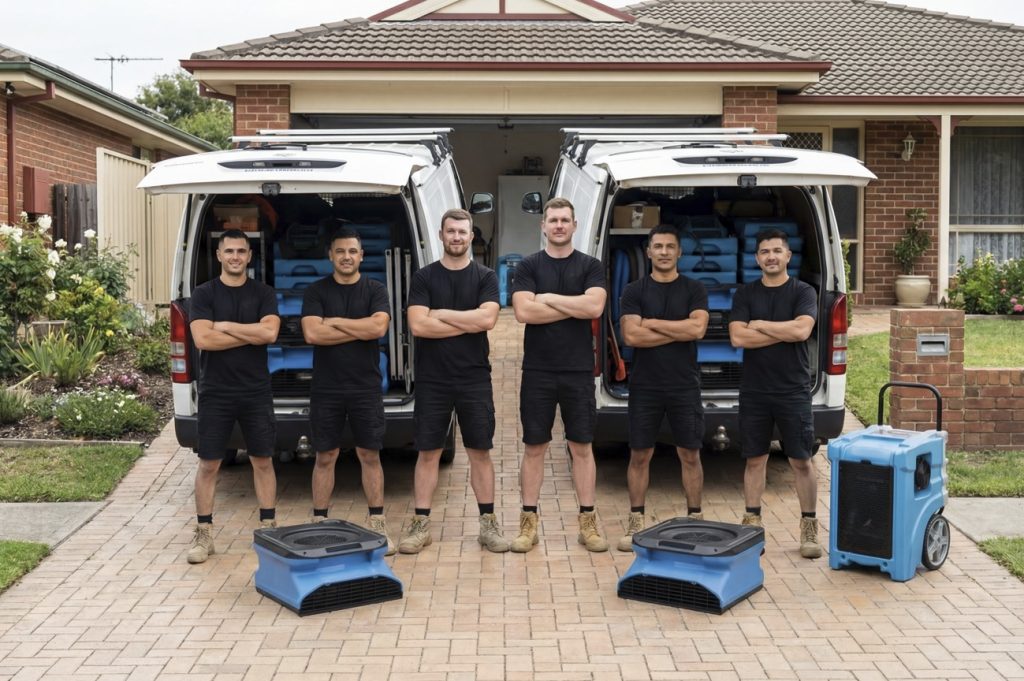
Flood Services Perth responds 24/7 and aims to be on site within the hour of your call. Our water damage experts make the property safe, extract standing water, then dry the structure with air movers and dehumidifiers while monitoring moisture readings. We check wall cavities and subfloors with moisture meters and thermal imaging, because the wet patch you can see is rarely the whole story.
Every job comes with photos, drying logs and a written report you or your assessor can work from. That report turns a verbal argument about a damp skirting board into a documented scope of works. We also handle home water damage cleanup and sanitising after grey or black water, mould remediation and the reinstatement work afterwards.
Conclusion
Water damage in WA is usually covered when the cause is sudden: a burst pipe, a failed hose, rain through a broken roof. It’s usually not covered when it builds up slowly, or when it’s flood and you never added flood cover. Work out which one you’re facing before you ring anyone, and photograph the lot before you touch it.
If the water is already in, get in touch with Flood Services Perth. We run emergency water damage services across the Perth metro area seven days a week, from water damage restoration in Perth city areas to emergency water damage cleanup in the hills and along the coast. Call us now on 08 9468 8413 or book us online for excellent flood restoration, extraction, sanitation, and we’ll deal with your insurer’s assessor while you get on with your life.
Frequently asked questions
1. Does home insurance cover water damage in WA?
Usually yes, when the cause is sudden. A burst pipe, a failed hot water system or storm damage is normally covered under home building or contents cover. Gradual leaks, maintenance issues and flood without flood cover are the common exceptions. Check the listed events in your PDS.
2. Is flood damage covered by home insurance in Western Australia?
Only if your policy includes flood cover. Some insurers include it as standard, some sell it as an option and some exclude it. The definition is the same across Australia: water escaping from a lake, river, creek, reservoir, canal or dam. Stormwater runoff is treated separately and is more often covered.
3. Does home building insurance cover a burst pipe?
Generally yes, for the resulting damage. The pipe itself is often excluded, and so is any rot or mould that built up before it burst. Sudden escape of liquid from fixed pipes sits inside standard cover under the Insurance Contracts Regulations 2017.
4. Does home insurance cover water damage from a leaking roof?
It depends on why it leaked. Rain forced in by a storm through a damaged roof or broken window is usually covered. A roof that has leaked slowly for months because the flashing failed is normally treated as maintenance and excluded.
5. Does home insurance cover mould caused by water damage?
Often yes, if the mould came from an insured event like a burst pipe. Mould from long-term damp, poor ventilation or a leak you knew about is usually excluded. Drying porous materials within 48 hours is the practical way to avoid the argument entirely.
6. Who pays for water extraction and drying after a flood?
If you hold flood cover, your insurer normally pays for make-safe, extraction and drying. Without flood cover you pay, unless the water classifies as stormwater runoff and your storm cover responds. Reasonable steps to prevent further damage are usually recoverable either way.
7. Can I claim water damage on home insurance if I rent the property?
Not on the building. That’s the landlord’s policy. Your belongings only sit under your own contents cover, which is why renters without it usually recover nothing. Report the damage to your property manager immediately and photograph everything before anything moves.